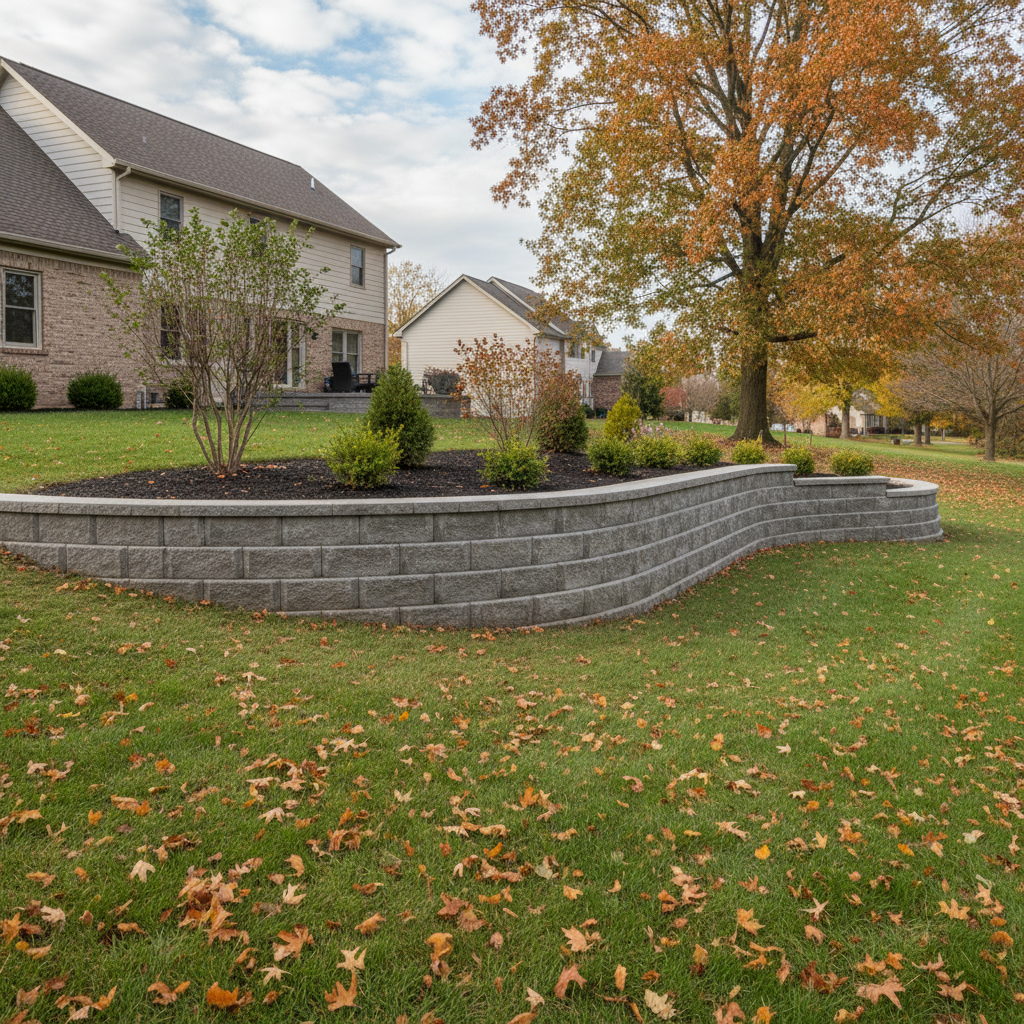
Let us talk about Concrete Retaining Walls here in Akron. You might have slopes on your property. You might also have some erosion issues. Or you are just looking to create some usable, level yard space. A well-built Concrete Retaining Wall can make a big difference for your property. Getting it right in our area means understanding our unique climate.
When to Schedule Your Retaining Wall Project
Timing is very important with concrete. This is especially true when you are talking about something like a Concrete Retaining Wall. You cannot just pour concrete any time of year and expect it to last for many years. This is true with Ohio's weather. Generally, spring and early fall are the best times for Concrete Retaining Wall installation.
- Spring: After the ground thaws out, spring offers moderate temperatures and workable soil. This is before the heavy summer rains. The soil is often just right for excavation as well as getting that important foundation in place.
- Early Fall: This is another good time for Concrete Retaining Wall projects. You have cooler temperatures. There is often less humidity. There is typically less rain than in spring. It is perfect for proper concrete curing as well as getting the wall built before winter's freeze-thaw cycles start. In addition, planning in the winter for a spring or fall build means you can avoid the busy season. You can also get on a contractor's schedule more easily.
You can pour concrete year-round. Doing it in extreme conditions just adds complications as well as costs. We at Champion Concrete Co. can work through many challenges. We always aim for the best conditions to make sure you get the best, most durable result for your investment.
Weather Conditions That Affect the Work
Akron's climate really puts concrete to the test. We have hot, humid summers. We also have freezing, snowy winters. Here is what we are always watching for when building a Concrete Retaining Wall in Akron:
- Freezing Temperatures: This is the biggest concern for Concrete Retaining Walls. Water expands when it freezes. If there is water in or around your concrete, that expansion can cause cracks as well as damage. We need temperatures above freezing for pouring as well as curing. If it is too cold, the concrete will not get strong enough. You will have problems later on. The frost line in Summit County, where Akron is located, can be around 38 inches deep. It can sometimes even be 42 inches in Northeast Ohio. Your wall's footing must be below that depth. This prevents frost heave from lifting as well as shifting the Concrete Retaining Wall.
- Extreme Heat: Too hot is not good either for Concrete Retaining Walls. High temperatures can affect how concrete cures. This can lead to less strength or cracking if it dries too fast. We take precautions like curing compounds. We also use careful timing on hot days. Moderate temperatures are always better.
- Heavy Rain: You do not want to pour concrete in a heavy rain. Rain can wash out the concrete mix. It can also weaken the concrete. It can make for a messy, difficult job. Wet soil also creates stability issues during excavation for your Concrete Retaining Wall.
- Saturated Clay Soil: This is a common challenge in Northeast Ohio. Our clay-rich soils hold a lot of water. Wet clay is heavier. It also puts more pressure on a wall than dry clay. If drainage is not handled perfectly, that water pressure can cause a wall to lean or fail. This is why proper drainage is key for any Concrete Retaining Wall in Akron.
Protecting Your Retaining Wall Year-Round
Once your Concrete Retaining Wall is installed, you want it to last. Here is how you protect that investment. This is especially important with Akron's average of 40 to 60 freeze-thaw cycles each year:
- Ensure Excellent Drainage: We cannot say this enough. Most Concrete Retaining Wall failures happen because of poor drainage. Make sure your wall has good drainage behind it. This includes gravel backfill. It also includes a perforated drain pipe at the base. This helps to relieve water pressure. The ground behind the wall should slope away to send water away from the structure.
- Seal Your Concrete: Concrete is porous. This means it can absorb water. When that water freezes, it expands. This can cause damage like cracks or scaling. Applying a good concrete sealer every few years creates a barrier. This prevents water from getting in. You should do this before winter arrives.
- Repair Cracks Promptly: Small cracks can become big problems fast in our climate. Water gets in. It freezes. It expands. This makes the crack wider. Inspect your Concrete Retaining Wall regularly. Use a concrete crack filler for any visible damage before winter.
- Mind Your De-icers: Be careful with what you use on or near your concrete. Some de-icing chemicals can be harsh. They can speed up damage to concrete surfaces. Look for concrete-safe de-icers if you need them. Avoid letting plowed snow piles sit against your Concrete Retaining Wall.
- Clear Snow and Ice: Do not let heavy snow and ice build up against your Concrete Retaining Wall. Regularly clear it away with a plastic shovel or broom. This reduces the load. It also prevents long periods of moisture exposure.
A properly installed and maintained Concrete Retaining Wall from Champion Concrete Co. is more than just a landscaping feature. It is a structural solution. It is built to stand up to the ups and downs of Akron's weather for many years. Take care of it. It will take care of your yard.