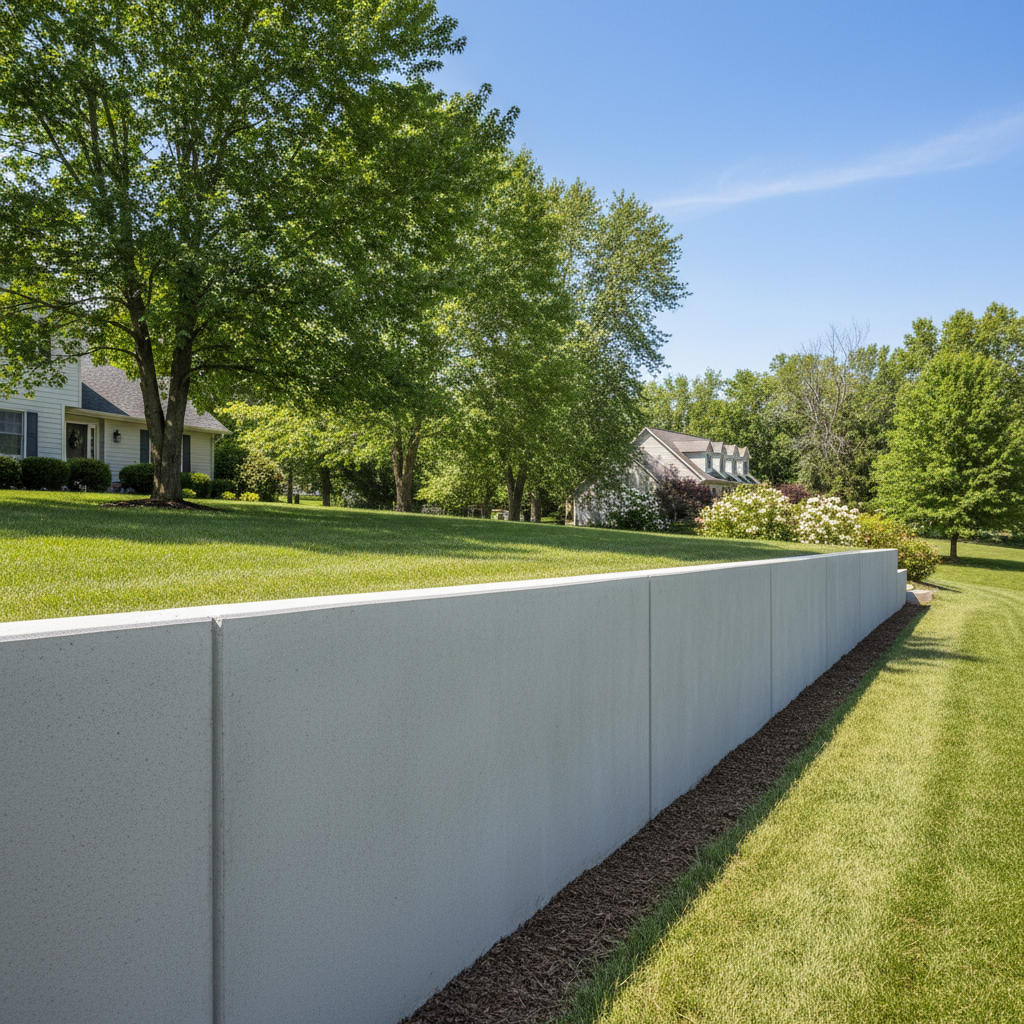
You've got a concrete retaining wall, maybe it's holding back a slope in your backyard or defining a garden bed. Whatever its job, that wall is a significant investment, and it's working overtime here in Akron, especially with our freeze-thaw cycles. You want it to last, right? So let's talk about what you can do to make sure it does.
Extend Your Wall's Life: It's All About Drainage
The single biggest enemy of a retaining wall isn't time; it's water. Water pressure behind the wall, especially when it freezes and expands, can put immense stress on the structure. When we build walls at Champion Concrete Co, we always ensure proper drainage is installed behind the wall – usually a gravel backfill and a perforated drain pipe that directs water away. But that system needs to stay clear.
Here's what you can do:
- Keep the area clear: Make sure the ground around the base of your wall, where the drain pipe outlets, isn't blocked by leaves, dirt, or landscaping. If water can't get out, it builds up behind the wall.
- Watch your gutters: If your downspouts are dumping water right behind or near the top of your retaining wall, you're asking for trouble. Extend those downspouts so water flows well away from the wall.
- Slope away: The ground directly behind the wall should slope slightly away from it, not towards it. This helps shed surface water.
Regular Check-Ups: What to Look For
You don't need to be a concrete expert to spot potential issues. Just take a walk around your wall a few times a year, especially after heavy rains or snowmelt. It's like checking your tires; a quick look can save you a big headache later.
- Surface cracks: Small, hairline cracks are often just surface shrinkage and usually aren't a big deal. But keep an eye on them. If they get wider, longer, or start to spiderweb, that's a red flag.
- Bulging or leaning: This is a major warning sign. If any section of your wall looks like it's pushing outwards, or if the top of the wall is leaning noticeably, that means the pressure behind it is too much.
- Water seepage: While some weeping from drain holes is normal, if you see constant water seeping through cracks or joints in the wall itself, or if the ground at the base is always saturated, your drainage system might be compromised.
- Efflorescence: That white, powdery stuff on the surface? That's efflorescence. It's mineral salts left behind as water evaporates from the concrete. It's usually harmless aesthetically, but if it's appearing in new spots or in large quantities, it can indicate excessive moisture movement through the wall.
- Erosion at the base: If the soil or landscaping at the base of your wall is washing away, it can undermine the foundation.
When to Call a Pro (Like Us!)
Look, I'm all for DIY, but some things are best left to the folks who do it every day. When it comes to retaining walls, catching a problem early can save you from a much more expensive repair down the line, or even a full wall collapse. You should absolutely call Champion Concrete Co if you see any of these:
- Significant cracking: Anything wider than a credit card, or cracks that are growing quickly.
- Bulging or leaning: Don't wait on this. This often means the wall's structural integrity is compromised.
- Foundation issues: If the base of the wall is eroding or sinking.
- Drainage problems you can't fix: If you've cleared outlets and still have standing water or constant seepage.
- Any sudden, noticeable change: Walls don't usually fail overnight. But if something looks different and you're not sure, get an expert opinion. It's always better to be safe than sorry, especially with the kind of clay soil we often deal with in places like West Akron, which can hold a lot of water and put extra strain on walls.
Your retaining wall is built tough, but it's not invincible. A little attention and knowing what to look for can keep it doing its job for decades. Don't hesitate to reach out if you're worried about anything you see.