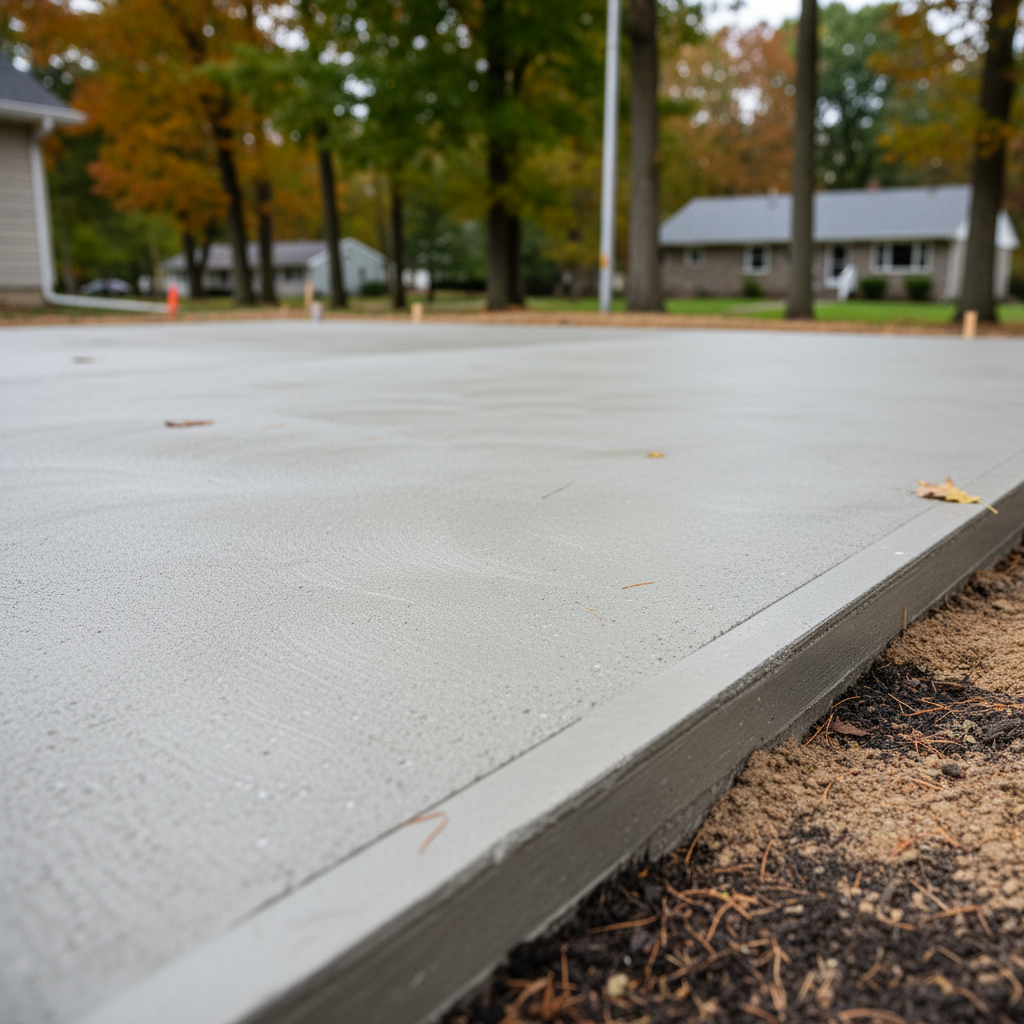
Ever dug into the heavy clay soil around Ellet or Firestone Park? If you have, you already know why Akron foundations take a beating. That wet northern Ohio clay expands when it is soaked and shrinks when it dries out, putting massive pressure on basement walls. If you are looking at a foundation project—whether you are patching up cracks or prepping for an addition—you need to know what you can actually handle yourself and what requires a heavy-duty pro.
Before the Pour: Prep Work You Can DIY
You do not need a crew of guys to handle the initial legwork. In fact, doing some of this yourself saves you a solid chunk of change. First off, get out there and check your grading. Water pooling against your foundation is public enemy number one in Summit County. You can easily rent a loader or grab a shovel to slope the dirt away from your house. Clear out any brush, mark your utility lines through the Ohio811 service, and handle the basic demolition of old wooden landscape ties or light brush yourself. If you are handy, building the batter boards for site layout is totally doable over a weekend.
During Construction: Leave This to the Heavy Hitters
Once it is time to dig deep and pour, step back. This is where people get in over their heads. Pouring concrete isn't like mixing a bag of Quikrete in a wheelbarrow for a fence post. Foundation work requires precise forms, exact rebar placement, and a concrete truck ready to empty yards of material before it starts setting up in the Ohio humidity. If a wall blows out during a pour because the bracing wasn't right, you are looking at a financial disaster. At Champion Concrete Co, we bring the right pumps, laser levels, and decades of muscle to make sure the structural integrity holds up against our brutal freeze-thaw cycles. You want a flat, square, level foundation that won't shift when winter hits hard.
After the Concrete Cures: Your Post-Project Checklist
Once the forms come off, your job starts up again. Concrete needs moisture to cure right, but you also need to manage the backfilling carefully. Do not go slamming heavy clay back against fresh concrete too soon, or you will crack it. Give it time. Once it is fully cured, your main focus shifts to maintenance. Keep your gutters clean, extend your downspouts at least six feet away from the house, and seal hairline shrinkage cracks before the spring rains turn your basement into a swimming pool. Stay on top of the small stuff now so you do not face a major structural headache down the road.